Emerald Waters: Discovering Khao Sok’s Hidden Dry Season
The Season Most Visitors Overlook
Most visitors to Khao Sok plan their trips around January and February. The logic is straightforward. Cool temperatures, clear skies, and settled conditions make these months an easy choice. But there is another window of the year that receives far less attention. It may offer the most compelling wildlife encounters the park has to give.
April marks the height of Khao Sok’s dry season. Temperatures reach their annual peak, with highs sitting around 33 degrees Celsius. Overnight lows rarely drop below 24 degrees. The air is warm and still. Rainfall is at its lowest point of the year. And in the canopy and at the water’s edge, something quietly remarkable is happening.
Experienced guides refer to this period as the hidden season. It is the time when the heat of the surrounding forest begins to shape wildlife behaviour in distinctive ways. During cooler, wetter months, animals range widely across the full extent of the park. By April, they are drawn toward a single constant source of relief. In Khao Sok, that source is the extraordinary Cheow Larn Lake.
This is not a season that announces itself loudly. There are no dramatic weather events, no flurries of flowers, no single defining moment. It is quieter than that. It requires a willingness to slow down, to wait, and to look carefully. Those who do are rarely disappointed.
What the Dry Season Does to the Forest

Understanding April requires understanding the park itself. Khao Sok covers 739 square kilometres of ancient rainforest. Scientists estimate the forest to be approximately 160 million years old. That makes it older than the Amazon and one of the planet’s most biologically rich habitats.
Within this vast ecosystem, Cheow Larn Lake plays a vital ecological role as the dry season deepens. The lake covers 165 square kilometres within the park. Its water is a deep, settled emerald. More than one hundred limestone karsts rise from its surface. These are the remnants of mountain peaks that stood here long before the valley was flooded to create the lake.
During the rainy season, animals move freely across the full territory of the park. Streams and pools form throughout the forest. Temporary water sources are plentiful and widely spread. By April, those smaller sources have diminished. The forest floor dries between the trees. The lake remains.
As the Khao Sok facts page notes, the lake supports the food chain at every level. Insects breed along its margins. Smaller creatures feed on those insects. Larger animals follow in turn. The drier the surrounding forest becomes, the more predictable wildlife movement becomes. And predictability, for the patient observer, is immensely valuable.
Mammals at the Water’s Edge

Khao Sok is home to around 48 mammal species. Among them are some of Southeast Asia’s most impressive and endangered animals. Wild Asian elephants move through the park in small family groups. The Malayan sun bear, compact and elusive, ranges across the forest floor. Clouded leopards inhabit the higher canopy. Tapirs follow their ancient routes between feeding areas and water. Gaur, the largest wild cattle species on earth, are occasionally encountered at forest margins.
During the peak dry season, the lake and its shoreline draw these animals toward a more predictable point. A quiet canoe at first light puts visitors at a natural vantage point. A slow drift along the bank at dusk does the same. Animals approaching the water to drink are less likely to detect a human scent carried on the wind. They are more likely to remain and to behave naturally for longer.
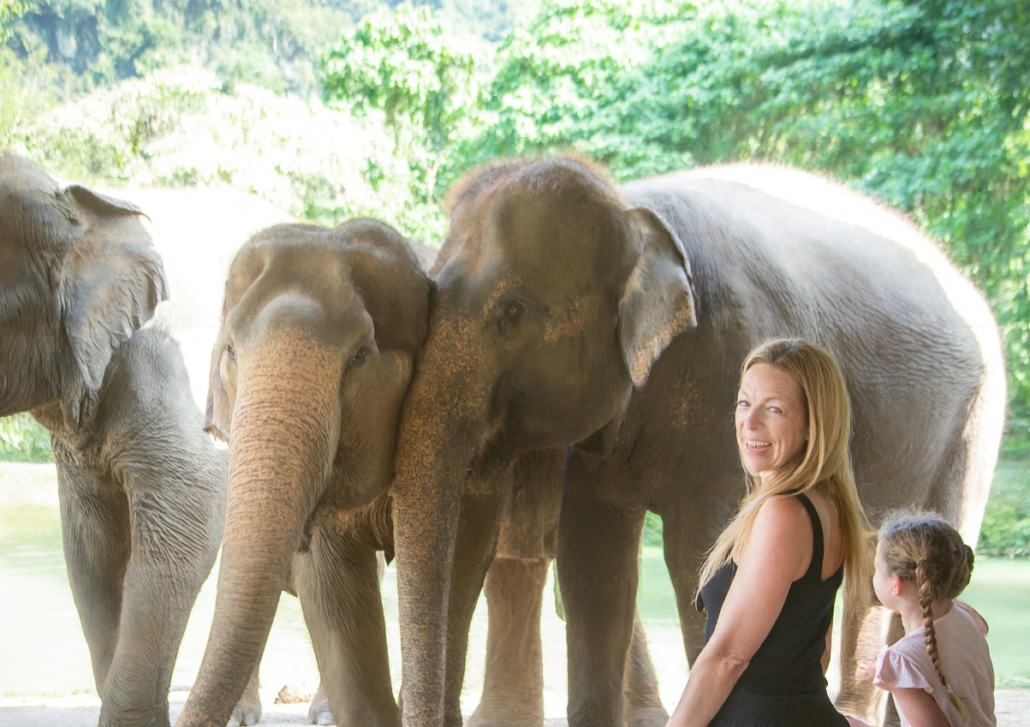
Elephants are among the most sought-after sightings in the park. They are present year-round, but the dry season concentrates their movements in ways that the cooler months do not. The same principle applies to the park’s primates. Gibbons, spectacled langurs, and macaques are all resident in Khao Sok. In April, activity patterns shift toward the hours just after dawn and before dusk. These are the coolest hours of the day. The light above the lake at these hours is at its most spectacular.
The park is also home to mouse deer, binturong, wild boar, barking deer, and the shy Malayan tapir. Many of these animals are rarely seen during the busier months. Their presence along the lakeshore in the early morning hours of the dry season can feel like an extraordinary privilege. There are no guarantees in wildlife watching. But there are conditions that make encounters more likely. April at Cheow Larn Lake is one of them.
Guides who know the lake understand where to position a boat. They know how long to wait without disturbing the forest around them. This kind of encounter is slow and quiet. It is conducted entirely on the animal’s terms. It is what makes the hidden season so memorable for those who seek it out.
Birdlife Above the Emerald Water
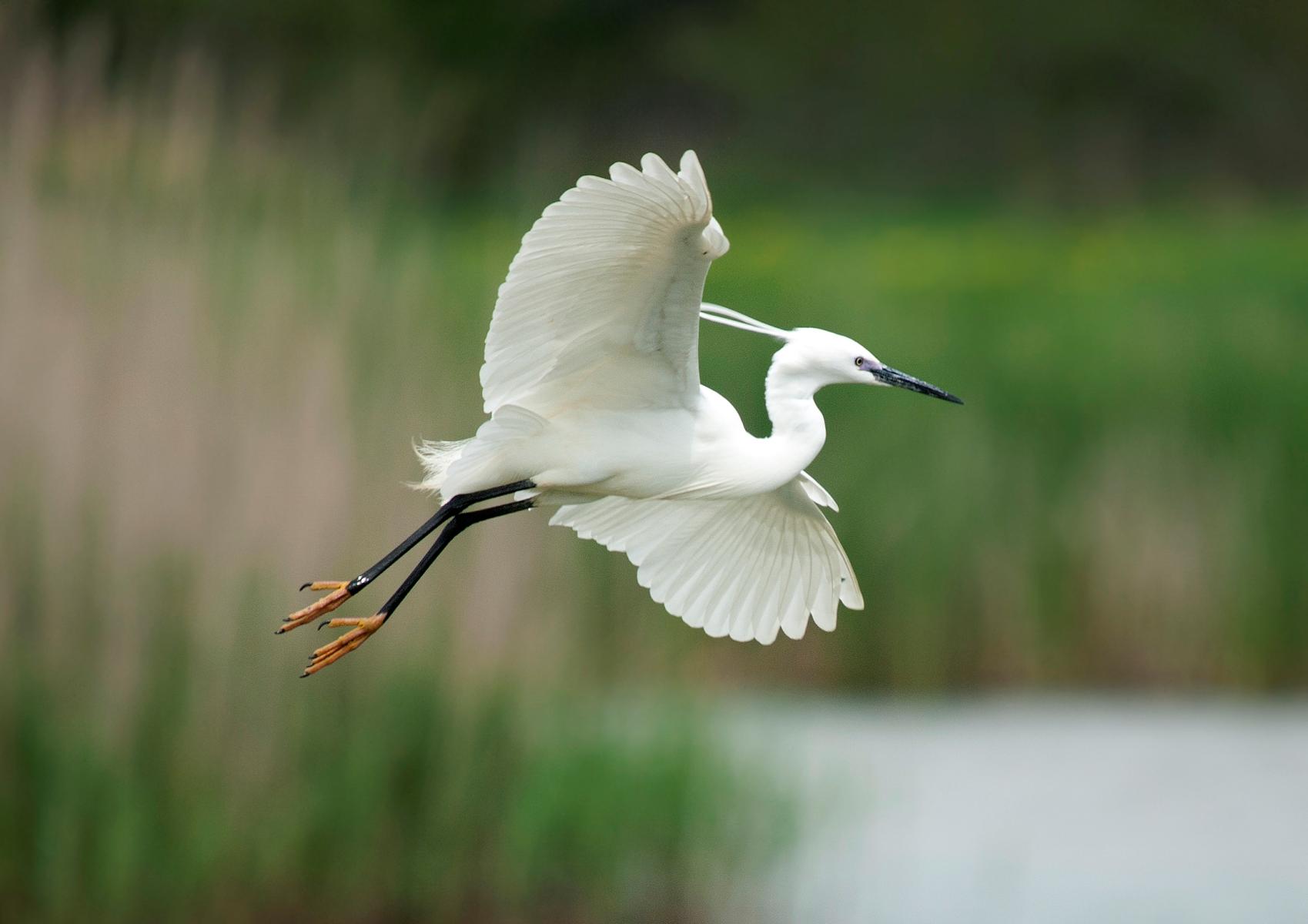
Khao Sok is home to 311 bird species. The park’s birdlife is exceptional at any time of year. April brings specific advantages for those with a serious interest in birds. Reduced humidity and the absence of heavy monsoon rain improve visibility throughout the forest. Better sightlines in the canopy reveal species moving between the treetops and the water below.
Hornbills are among the most striking birds found here. Several hornbill species are recorded within the park. Cheow Larn Lake provides an ideal territory for observing them in flight. Their large, distinctive silhouettes cross open water between forested ridges. The sound of their wingbeats carries across the lake from a considerable distance. It is unlike anything found in a European woodland, and unlike anything easily forgotten.
Kingfishers work the shallower margins of the lake throughout the day. They drop from low perches to take fish just below the surface. Drongos, broadbills, and various raptor species add to the aerial picture over the water during these dry season months. Open water, forested cliffs, and emerald shallows create a layered birdwatching environment. It is difficult to replicate elsewhere in Thailand.
For a full overview of the species recorded in the park, the Fauna page provides a useful starting point. Guided lake excursions are often led by naturalists who can identify species by call as well as by sight. That knowledge adds considerably to the experience.
Planning a Hidden Season Visit
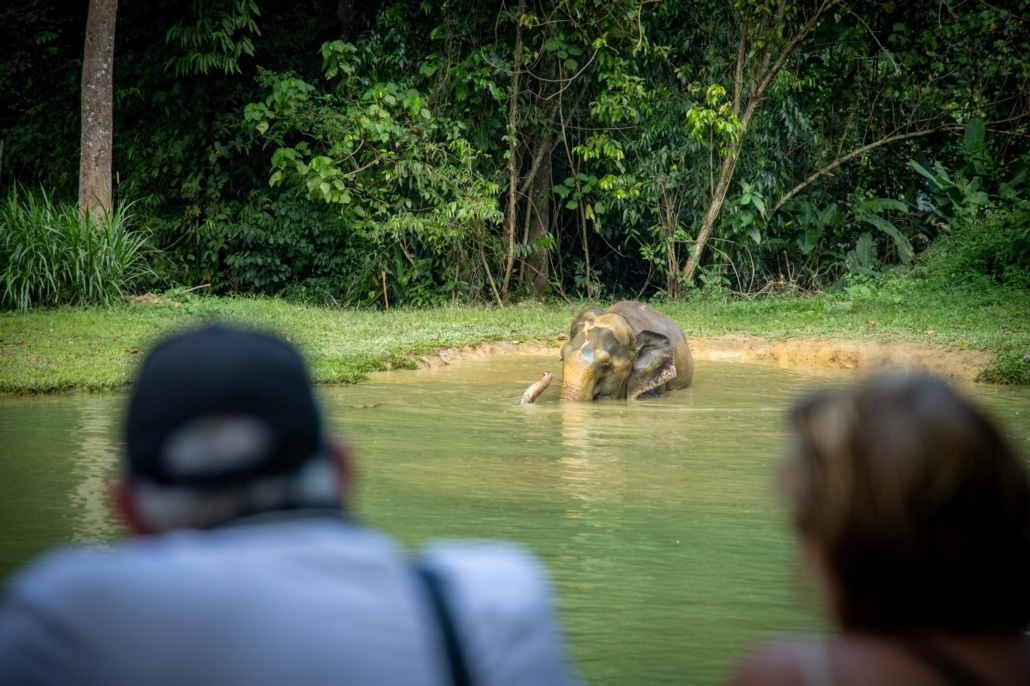
The best way to experience Khao Sok’s dry season is from the lake itself. Day visits offer a glimpse. The early morning and evening hours are when wildlife is most active. They are accessible only to those who stay overnight within or beside the park.
An overnight stay on the lake puts guests on the water before dawn. This is when the forest is most alive. Gibbons call from the canopy above. Mist sits low over the surface of the water. In that early light, the chances of an extraordinary encounter are at their highest.
The When to Visit guide offers a broader overview of what each season brings to the park. You can also explore Khao Sok wildlife in January for a comparison with the cool dry season, and read about Khao Sok’s growing reputation for responsible tourism and what it means for visitors in 2026.
April suits families, couples, and solo travellers alike. It is a season that rewards patience and curiosity in equal measure. It rewards those willing to look beyond the expected.
Explore the full range of recommended tours and find the experience that suits your group. Whether you have two nights or a full week, the hidden season at Cheow Larn Lake is one of southern Thailand’s most rewarding wildlife experiences.