
Khao Sok 2026: Setting the Gold Standard for Eco-Tourism
There is a shift in how people choose where to travel. It is no longer enough to visit somewhere beautiful. More and more travellers want to know that their presence leaves the place better than they found it. Khao Sok National Park in Southern Thailand has long been one of the world’s great natural treasures. In 2026, it is becoming something else as well: a benchmark for what responsible, eco-tourism can look like at its best.
This is not a destination that has bolted sustainability onto its offering as an afterthought. The rainforest here is believed to be older than the Amazon, having survived relatively unchanged for around 160 million years.
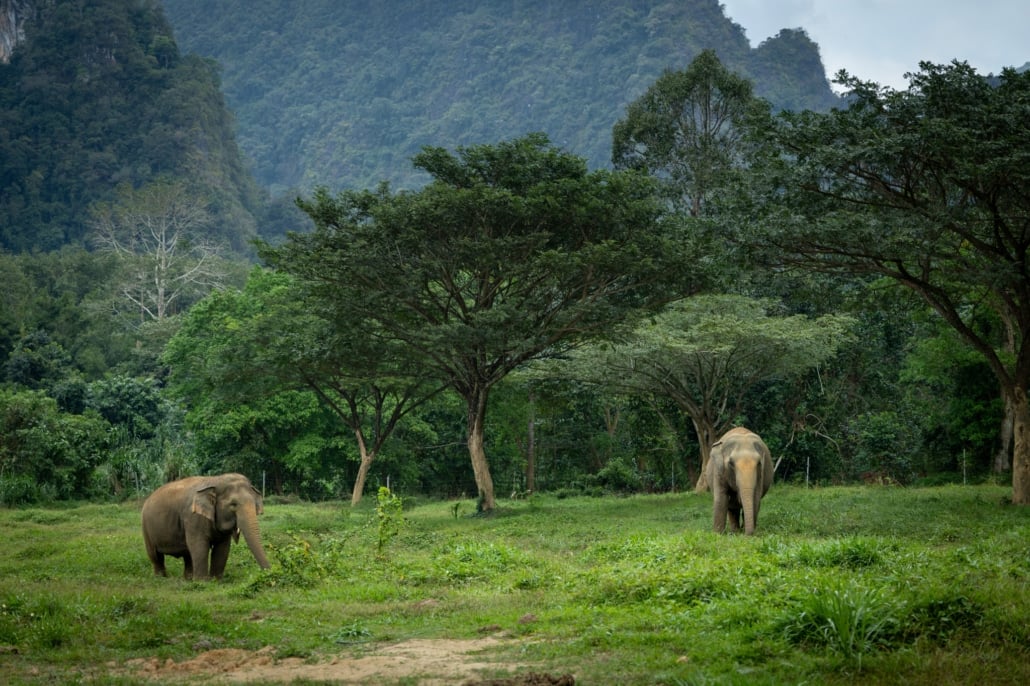
The park itself covers 739 square kilometres and, together with the adjacent wildlife sanctuaries of Khlong Saeng, Khlong Yan, and Khlong Naka, forms a protected corridor of more than 3,500 square kilometres. That is a landscape more than half the size of Bali, sheltering 311 species of bird, 48 species of mammal, and around 200 wild Asian elephants. Protecting it is not a marketing choice. It is an ecological obligation.
What the STAR Rating System Means for Travellers

In 2023, the Tourism Authority of Thailand (TAT) introduced the Sustainable Tourism Acceleration Rating (STAR). The programme evaluates tourism businesses, including hotels, attractions, and tour operators, against Thailand’s 17 Sustainable Tourism Goals (STGs). Those goals are drawn directly from the United Nations’ Sustainable Development Goals, covering everything from environmental responsibility and cultural preservation to community wellbeing and good governance. Businesses are assessed and awarded between three and five stars, with five representing the highest standard of sustainable practice.
By August 2025, more than 2,300 businesses across Thailand had joined the STAR programme. TAT has set an ambitious target of 70 per cent of all tourism businesses in the country being STAR-accredited by the end of 2026. This is part of a broader framework called the New Thailand Vision 2026, which repositions the country’s tourism model around quality, meaning, and long-term value rather than visitor numbers alone.
For travellers who care where their money goes, STAR accreditation is fast becoming the clearest signal that a business has genuinely earned its green credentials. The tours available through this site have received recognition at the highest level of the STAR programme, alongside serial wins at the Responsible Thailand Awards, reflecting a sustained commitment to these principles rather than a one-off achievement.
Regenerative Eco-Tourism: Beyond Doing Less Harm
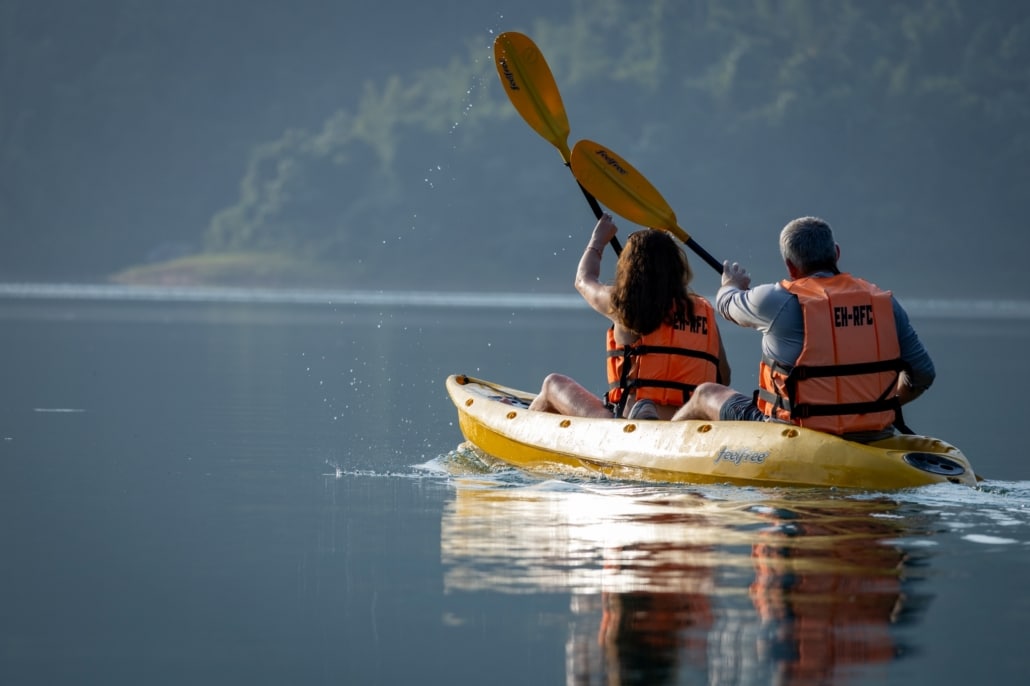
The conversation around sustainable travel has evolved. For much of the past decade, the goal was harm reduction: leave no trace, choose lower-carbon transport, support local suppliers. Those principles still matter, and they remain central to how responsible operators work in Khao Sok. But regenerative eco-tourism goes a step further. It asks whether a visit can actively restore the ecosystems, communities, and cultures that make a destination worth visiting in the first place.
In Khao Sok, that question has real answers. The park faces documented pressures, including poaching, unregulated plantation expansion, and the risks that come with increasing visitor numbers. Around 140,000 people visit each year, and park entrance fees provide vital funding for maintenance, ranger patrols, and conservation efforts. Well-trained rangers patrol the park continuously, educating both visitors and local communities.
Volunteer organisations work alongside government agencies to protect endangered species. The Khao Sok Children’s Project brings conservation education into local schools. These are not background details. They are the infrastructure that keeps the rainforest standing. When you visit responsibly, you become part of that infrastructure. You can read more about the threats and conservation efforts in Khao Sok to understand the full picture.
The tours available through this site are designed with this relationship in mind. Activities are guided, group sizes are managed, and the experiences themselves, from walking jungle trails to encountering Asian elephants in a chain-free setting, are structured to minimise disturbance while maximising understanding. Eco-tourism travel in this way is not a compromise. It is often a richer, more immersive experience than an unguided visit.
Why Khao Sok Matters on a Global Scale

It is worth pausing to consider what this place actually is. The evergreen rainforest covering Khao Sok supports roughly 200 plant species per hectare. That figure alone puts it among the most biodiverse habitats on the planet. The landscape sits at the meeting point of two monsoon systems, the northeast monsoon from the Pacific and the southwest monsoon from the Indian Ocean, which gives it the highest annual rainfall in Thailand at around 3,500 millimetres per year. That moisture sustains a canopy dense enough to shelter species that have persisted here since before the ice ages reshaped other forests across the globe.
The fauna of Khao Sok includes tigers, gaur, tapirs, and more than 30 species of bat, alongside the great hornbill with its spectacular wingspan of over 1.5 metres. The flora includes the Rafflesia, the largest flower on Earth, and carnivorous pitcher plants that can consume small mammals. These are not curiosities. They are indicators of an ecosystem functioning at a level that most of the world’s remaining wild places cannot sustain.
Visiting Khao Sok with that awareness changes the experience. It makes even a morning walk along a river trail feel genuinely significant. For a deeper look at the wildlife you are most likely to encounter, the recent article on Khao Sok wildlife in January gives a sense of what the park offers across the seasons.
How to Visit in a Way That Makes a Difference
Choosing a STAR-recognised tour is the single most effective step a visitor can take toward travelling regeneratively in Khao Sok. Beyond that, the principles are straightforward. Stay longer rather than passing through. Longer stays generate less transport impact per experience day and allow a deeper understanding of the place.
Follow the park’s code of conduct: take all litter out, stay on marked trails, and never disturb wildlife. Spend locally wherever possible. If you see anyone breaking the rules, the National Park Headquarters can be reached on +66 (0) 7739 5154.
The rewilding adventures article published previously on this site explores how Khao Sok is already leading the way in eco-tourism. The 2026 STAR framework gives that leadership a measurable, internationally recognised framework. It also gives travellers a reliable way to distinguish between operators who have genuinely invested in sustainable practice and those who have simply adopted the language of it. The difference matters, here more than almost anywhere.
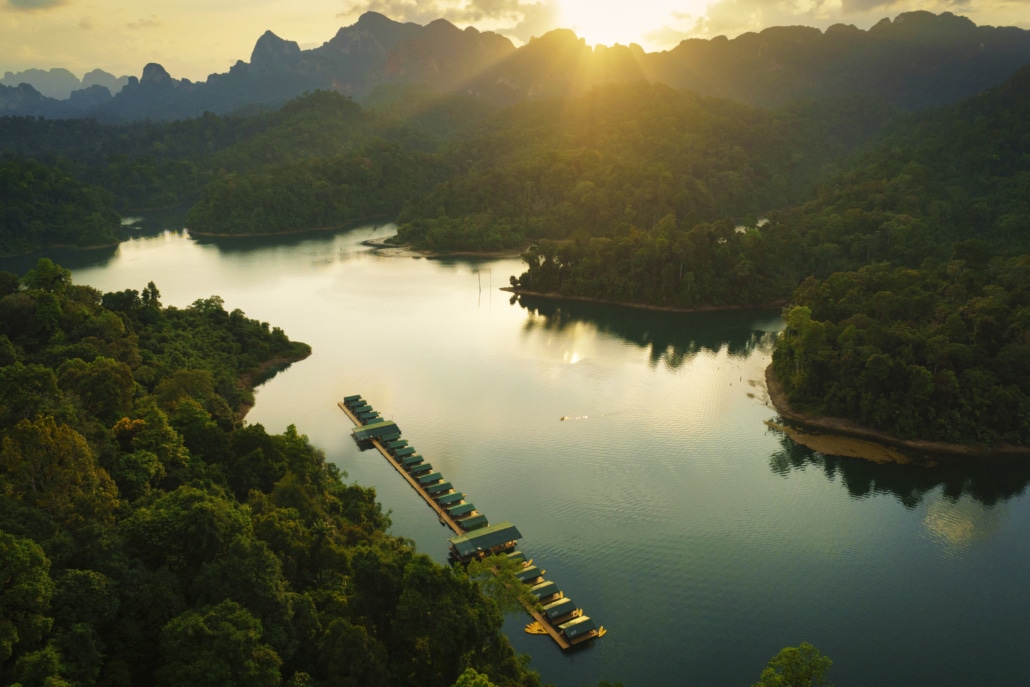
The dramatic limestone peaks and Cheow Lan Lake that draw photographers and adventurers to Khao Sok are not separate from the conservation story. They exist because the forest around them has been protected. Keeping them this way requires a particular kind of visitor: curious, considerate, and willing to invest in experiences designed to do good. In 2026, that kind of travel has a rating system behind it. Khao Sok has earned its place at the top.
Plan Your Eco-Tourism Visit
Khao Sok National Park is open year-round and sits within easy reach of Phuket, Krabi, Koh Samui, and Khao Lak. Whether you are planning a family adventure, a couple’s escape, or a solo journey into one of the world’s great rainforests, the recommended tours available through this site offer a range of itineraries to suit different lengths of stay and interests. All include return transfers from Southern Thailand’s major hubs, guided activities, and accommodation ranging from jungle glamping tents to floating lake bungalows on Cheow Lan Lake.
Visit the recommended tours page to explore your options and book an eco-tourism experience that puts conservation at its centre. There has never been a better time to visit well.
