The Green Awakening: Nature’s New Rhythm in Khao Sok

Khao Sok weather in May sits at a remarkable threshold. The dry season is drawing to a close. The first monsoon rains are arriving. And inside one of the world’s oldest rainforests, something genuinely extraordinary begins to happen. The forest exhales. Colour deepens. Sound amplifies. Wildlife concentrated at the lakeshore for months begins its slow return to the wider landscape. For travellers who time their visit well, this seasonal transition offers some of the most compelling experiences the park has to give at any time of year.
What Happens to the Rainforest When the Rains Return
Khao Sok covers 739 square kilometres of ancient rainforest, estimated by scientists to be approximately 160 million years old. That makes it considerably older than the Amazon, and one of the most biologically rich habitats on the planet. Through the dry months, the forest runs on a kind of compressed intensity. Animals gravitate toward water. Growth slows. Then May arrives, and the shift begins.
The change is not dramatic in the way a storm is dramatic. It is quiet and cumulative. The first afternoon showers arrive with warmth and weight. Within hours, the forest floor darkens. Within days, new growth is visible on every branch. The air carries the scent of wet bark and earth that has been waiting months to receive water. Temperatures in May average around 32 degrees Celsius during the day, with overnight lows around 24 degrees Celsius. The rains bring relief from the peak heat of April and, with it, a forest visibly returning to life.
The park holds approximately 200 different plant species per hectare. Figs, lianas, dipterocarp trees, bamboo, and pitcher plants all respond to returning moisture. The canopy thickens. Moss rehydrates on limestone. What had been still and sun-warmed becomes vital and layered in texture. Khao Sok is home to 311 recorded bird species, and birdwatchers find this period particularly rewarding. Activity surges with the first showers. Many species call and forage more actively in the period immediately after rain, when insects emerge, and the light sits soft and diffuse. Hornbills, kingfishers, and broadbills are among the most regularly reported sightings at dawn in May. The forest chorus at this time of year is something most visitors find entirely unexpected.
Wildlife Behaviour at the Seasonal Turning Point

Throughout the dry season, the park’s larger mammals concentrate their movements around reliable water sources. Cheow Lan Lake plays a central ecological role. At 165 square kilometres, with more than one hundred limestone karsts rising from its surface, the lake is the anchor of the park’s wildlife activity in the hotter months. As the forest floor dries between the trees, animals move toward it.
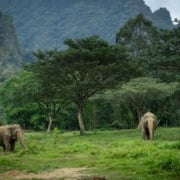
By May, the dynamic begins to shift. Early in the month, wildlife still moves with the habits of the dry season. Elephants, of which there are approximately 200 wild individuals in the park, continue to favour the lake margins at dawn and dusk. Gibbons call from the canopy at first light. Spectacled langurs, macaques, barking deer, and the elusive Malayan tapir remain visible to those who rise early and stay patient. The park is home to 48 mammal species. As May progresses and rainfall becomes more regular, animals begin to disperse back into the wider protected habitat surrounding the park.
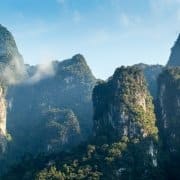
This transitional behaviour means May guests can experience something rare. The concentrated wildlife patterns of the dry season coincide with the first extraordinary flush of the wet. Mornings at the lake remain the most productive time for observation. Mist sits low over the water. Limestone karsts rise from the surface in thin early light. The conditions suit both the naturalist and the photographer in equal measure. The park receives far fewer visitors than in the December to April high season. Wildlife encounters feel more spacious. The forest feels less managed and more genuinely alive.
The Ethical Elephant Experience in a Forest Coming Alive
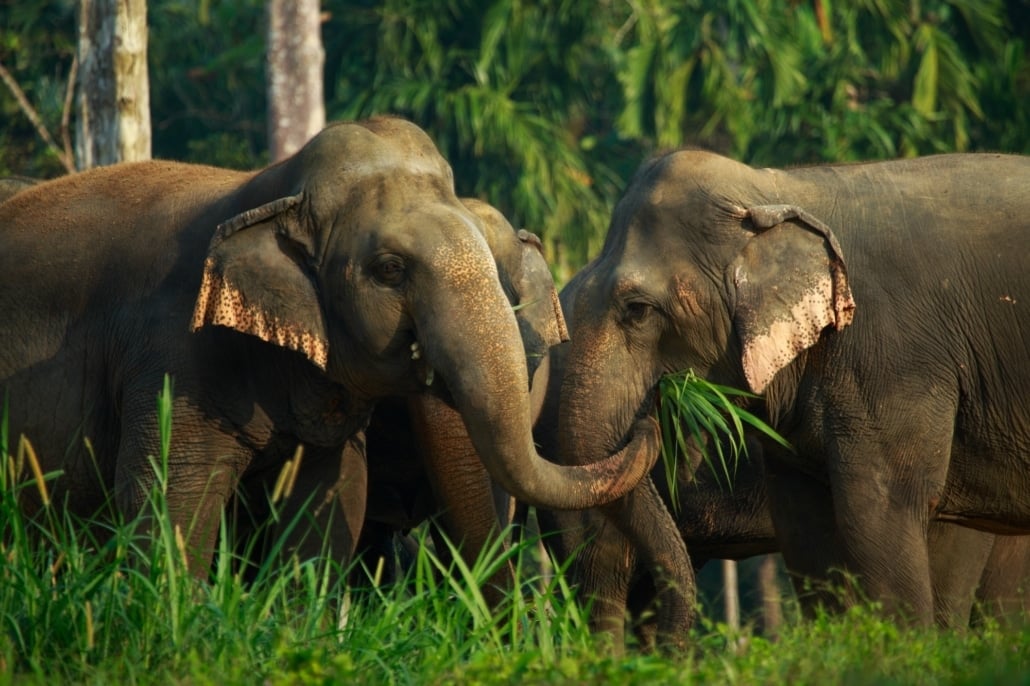
There is no finer backdrop for the guided elephant experience than the rainforest in this state of renewal. The elephants featured in the tours recommended on this site live and move in free-roaming habitats. Their environment is the rainforest itself. In May, that environment is in a vivid state of transition.
The ethical elephant experience is built around observation and natural connection. Guests prepare food for the elephants, which is then provided at designated feeding stations within their free-roaming habitat. The elephants approach, move, and interact entirely on their own terms. This approach reflects a broader commitment to how responsible wildlife experiences should work within a protected landscape. The result is a quieter, more attentive encounter. Watching an elephant move through a rainforest that is actively greening around it, in the diffuse light of a May morning, is an experience that sits outside conventional travel categories.
Families find this period particularly well-suited to the experience. Children respond to the observation-led format with genuine engagement. There is more to notice when the forest is this active. A hornbill passing overhead, a gecko on a tree root, and the distant sound of gibbons moving through the canopy all add texture to the encounter. Smaller visitor numbers in May make the experience feel more personal. The difference between an elephant trek and this kind of ethical experience is worth understanding before planning your visit.
Planning Your Visit: What to Know About Khao Sok Weather in May

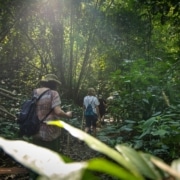
May should be understood as a month of transition in the most positive sense. Mornings are typically clear and warm. Afternoon showers become increasingly regular as the month progresses, usually lasting one to two hours. The forest manages rain very effectively. Activities continue throughout. Guided jungle treks, canoe safaris, and lake tours all operate during May. The full seasonal guide for Khao Sok explains how each period of the year offers its own character and rewards.
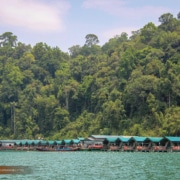
Accommodation on Cheow Lan Lake is more flexible in May than during peak season. Floating bungalows, widely regarded as one of the most atmospheric places to stay in Southern Thailand, can be reserved with greater ease. Waking on the water as mist rolls across the surface is an experience many guests describe as the highlight of their entire trip. An overnight stay makes this possible, placing guests on the lake before dawn when the forest is at its most active. Day visits offer a glimpse; staying overnight opens the full experience.
Practical preparation is straightforward. Light, breathable clothing works well throughout the month. A packable waterproof layer is worth carrying for afternoons. Insect repellent is advisable on all jungle trails, and footwear with good grip makes wet paths easier to manage. Park entrance fees are included in all recommended tour packages. Khao Sok sits at the centre of the Kra Isthmus, between the Andaman and Gulf of Thailand coasts. This position gives it one of the highest average rainfall totals in the country and, with it, one of the richest ecosystems on Earth. May sits precisely at the point where that richness begins its annual renewal.
Ready to experience Khao Sok at its most alive? Browse the full range of guided tours, overnight lake safaris, and ethical wildlife experiences and plan your visit to the rainforest at the moment of its green awakening.
You might also like:
Emerald Waters: Discovering Khao Sok’s Hidden Dry Season
Raindrops and Rainforests: A Rainy Season Guide to Khao Sok
Exploring Cheow Lan Lake: The Jewel of Khao Sok