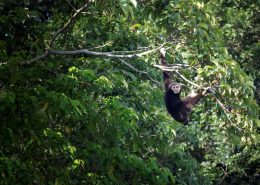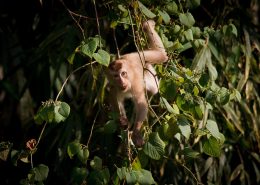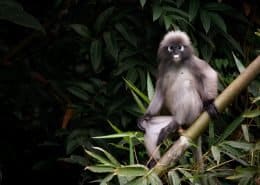

| Type: | The stump‐tailed macaques | The long‐tailed macaques |
|---|---|---|
| Size: | Males are larger than females, measuring 51.7–65 cm long while females measure 48.5-58.5 cm | The body length of the adult is 38–55 cm. The tail is longer than the body, typically 40–65 cm. |
| Weight: | Males weight 9.7-10.2 kg and females weight 7.5-9.1 kg. | Males are larger than females. Males weight 5-9 kg while females weight 3-6 kg. |
| Colouring: | Having long, thick, dark brown fur covering their body, but their face and their short tail are hairless | The upper parts of the body are dark brown with light golden brown tips. The under parts are light grey with a dark grey/brown tail. The eyelids often have white markings. |
| IUCN Red list: | Vulnerable | Least Concern |
Macaque
(genus: macaca)
Description:
Macaques are the most widespread primates on the planet. There are 23 species of macaques and their habitat ranges from Japan to mainland Asia to Northern Africa and Southern Europe. The most common species of macaque seen in Khao Sok national park are the stump‐tailed macaques and the long‐tailed macaques. Even though some of the species feature a tail and some don’t, they are all classified as monkeys and not as apes. Macaques live in groups called troops and they have a very complex social structure consisting of dominant and submissive individuals.
Did you know...?
Macaques spend a lot of time grooming each other. By doing this, they develop friendships and it helps them to strengthen social bonds within their troop.