The True Jungle Book: Khao Sok’s Floating Camp Reading Retreat

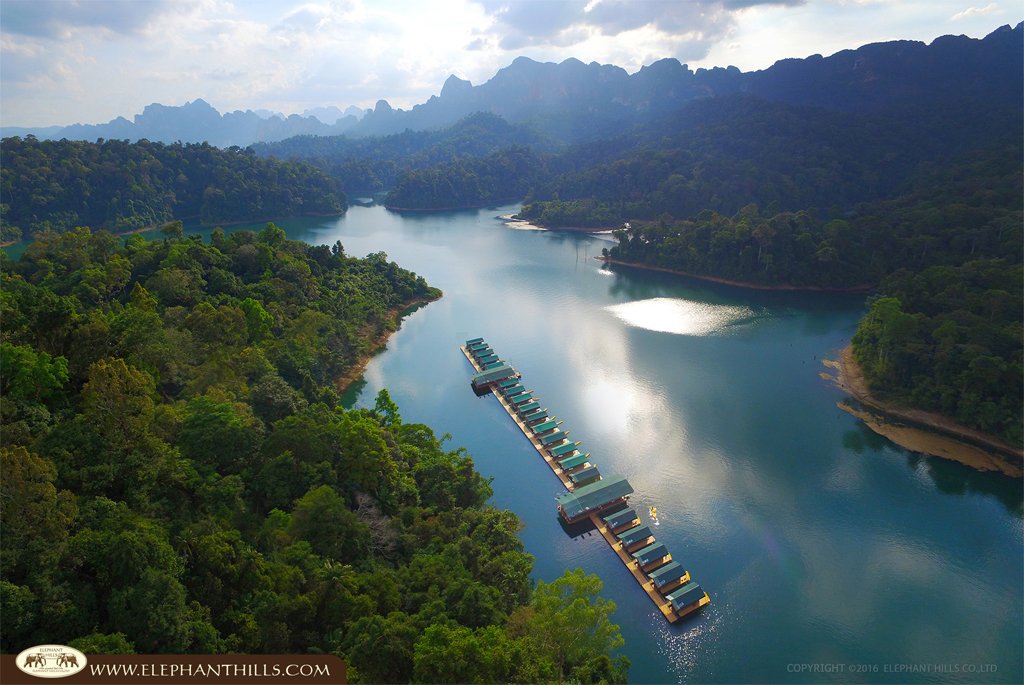
Khao Sok National Park is home to one of the world’s few genuine floating camps, anchored on the still, emerald waters of Cheow Lan Lake. For travellers chasing a floating camp reading retreat, this is about as far from a notification as it gets. There is no wifi, no phone signal, and very little to do after dark except listen to the rainforest and turn a page.
What Makes Khao Sok’s Floating Camp the Ultimate Reading Retreat

The camp itself answers the question directly: it is simply too remote for distraction to follow you there. Cheow Lan Lake sits deep inside a 739 square kilometre national park, reached only by longtail boat across 165 square kilometres of water dotted with limestone karsts. Once the boat pulls away, so does everyday connectivity.
This is not an accident of location. The floating tents that make up the camp run on solar and wind power, with no internet infrastructure built in. Skyscanner’s 2026 Travel Trends report names this kind of literary escape “Bookbound”, noting that 57 per cent of travellers have booked or considered a trip inspired by a book, with hotel searches using a “library” filter up 70 per cent year on year. Cheow Lan Lake was, in effect, built for this trend before the trend had a name.
Each tent is small and self-contained, which matters more than it sounds. There is no restaurant menu to browse, no shuttle bus schedule to check, and no wifi password to hunt for. The reading simply happens because very little else is competing for attention.
A Day Built Around Books: Mist, Private Decks and Uninterrupted Hours

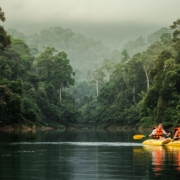
Mornings on the lake begin with mist rolling off the limestone cliffs, usually before the camp’s kitchen has finished laying out breakfast. Guests staying in the floating tents step directly onto a small private deck over the water, which becomes the natural reading spot for most of the stay.
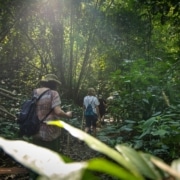
There is a loose daily rhythm rather than a strict schedule. A boat trip or short jungle walk typically fills the middle of the day, leaving long, quiet stretches on either side of it. Afternoons on the lake are particularly still, and many guests find this the easiest time to lose an hour or two in a novel.
The setting itself does some of the work. Cheow Lan Lake formed in 1987 when the Rachaprapha Dam flooded the valley, leaving more than a hundred limestone karsts rising from the water like the remnants of a lost world. It is easy to see why the lake has long been compared to a scene from a storybook, and why it now draws readers hoping to feel like they have stepped inside one.
| Floating camp feature | Why it suits a reading retreat |
|---|---|
| No wifi or phone signal | Removes the usual pull of notifications and messages |
| Private deck over the water | A quiet, shaded spot with no shared lounge noise |
| Solar and wind-powered tents | Reading lights available, without generator noise at night |
| Boat only access | A natural buffer against day trippers and passing traffic |
Why Disconnecting on Cheow Lan Lake Actually Works

Plenty of hotels advertise a digital detox without truly delivering one. Cheow Lan Lake is different because the absence of wifi and phone signal is a practical outcome of its location, not a marketing decision. There is simply no signal to switch off, which removes the temptation to check anyway.
The lake’s ecology adds to the sense of stepping outside ordinary time. It supports around 311 recorded bird species, along with fish that gather visibly beneath the floating tents after dark. Gibbon calls often carry across the water at dawn, long before most guests are awake enough to notice they have not reached for a phone.
The green season, running from May to October, tends to suit this kind of stay especially well. Rainfall keeps the surrounding rainforest at its fullest, waterfalls run more strongly, and the lake sees fewer day boats than during the busier dry-season months. A quieter lake makes for a quieter afternoon of reading, with little beyond birdsong and water against the pontoon to interrupt it.
Planning a Floating Camp Reading Retreat
A stay on the lake is usually built into a wider three- or four-day jungle-and-lake itinerary, rather than booked as a standalone night. Most itineraries pair one or two nights at a jungle-based camp with a night on the floating camp itself, which also includes a guided elephant experience.
From 1 May 2026, that elephant experience has shifted to an observation-led format. Guests help prepare food, which is then left at feeding stations within the elephants’ free-roaming habitat, so any interaction happens on the elephants’ own terms rather than by hand. It is a gentler, more natural addition to a trip otherwise built around quiet mornings and slow afternoons.
A few packing notes make the difference between a comfortable reading retreat and a frustrating one. Bring physical books rather than relying on a device, since there is no way to charge multiple gadgets and no signal to download anything new once you arrive. A dry bag protects paperbacks during the boat transfer, and a small torch or headlamp is useful for reading after the tent lights are switched off. Pack light, since luggage beyond an overnight bag is generally stored before the boat departs.
Cheow Lan Lake will not suit every traveller. Those wanting air conditioning, constant Wi-Fi, or late-night entertainment are better served elsewhere in Southern Thailand. For anyone drawn to the idea of finishing a novel to the sound of rain on canvas and water lapping against a pontoon, however, this is one of the more complete versions of that experience currently available in Thailand.
Frequently Asked Questions
What is a floating camp on Cheow Lan Lake like?
A floating camp on Cheow Lan Lake consists of safari-style tents built on secured pontoons that rest directly on the water. Guests reach the camp by traditional longtail boat. Tents typically include an en suite bathroom, a solid double or twin bed, and a small private deck facing the lake.
Is there wifi at the floating camp on Cheow Lan Lake?
No. Floating camps on Cheow Lan Lake are powered by solar and wind energy and do not offer wifi or phone signal. This makes them a genuine escape from notifications, and one reason they suit travellers looking for a reading retreat.
What is the best time of year for a reading retreat in Khao Sok?
The green season, from May to October, brings mist over the limestone karsts, fuller waterfalls, and a hushed, quieter version of the lake with fewer boats. This softer atmosphere suits slow mornings and long reading sessions particularly well.
What should I pack for a floating camp reading retreat?
Pack lightweight, quick-drying clothing, a dry bag or waterproof pouch to protect books and electronics on the boat transfer, a torch or headlamp for evenings, and any physical books you plan to read, since replacements are not available at the camp.
How do I book a stay at Khao Sok’s floating camp?
A floating camp stay is included as part of a multi day jungle and lake itinerary rather than booked on its own. These itineraries can be arranged through the tours recommended on this site, which include transfers, meals and a lake camp night.
Ready to trade your notifications for a private deck over the water? Browse the tours recommended on this site to find an itinerary that includes a night on Khao Sok’s floating camp.