Khao Sok Limestone Karsts: An August Guide to the Ancient Monoliths

Khao Sok limestone karsts rise from Cheow Lan Lake as remnants of an ancient seabed, pushed skyward tens of millions of years ago. August brings a distinct look to these monoliths, as monsoon clouds gather around the cliffs and mist settles over the water each morning. This guide traces the geological story behind the karsts and explains how to experience them at their most atmospheric.
How Khao Sok Limestone Karsts Took Shape

The monoliths began as a coral reef roughly 280 to 225 million years ago, during the Permian period. Millions of years of tectonic movement then lifted the seabed into the peaks visitors see today.
According to Khao Sok National Park’s own historical records, warm, shallow seas once supported a coral reef stretching from China to Borneo, estimated to be five times the length of the Great Barrier Reef. Limestone formed as marine life accumulated over the ancient reef bed. Around 66 million years ago, the Indian tectonic plate collided with the Eurasian plate. The same collision that raised the Himalayas forced this limestone upward, shaping the mountainous terrain across Southern Thailand.
Rainfall has done the rest. Slightly acidic water, filtered through rainforest leaf litter, has eroded the limestone for millions of years. This process, known as karst formation, has carved the freestanding towers, caves and cliffs now scattered across Cheow Lan Lake. For a broader explanation of how this landscape type forms worldwide, Britannica’s overview of karst geology is a useful reference.
Ground level across the region sits at around 200 metres above sea level. Average peaks reach roughly 400 metres, and the tallest point in the National Park rises to 960 metres. Marine fossils are still occasionally found near the summits, a quiet reminder of the karsts’ underwater origin.
Cheow Lan Lake in August: Cloud, Mist and Shifting Light
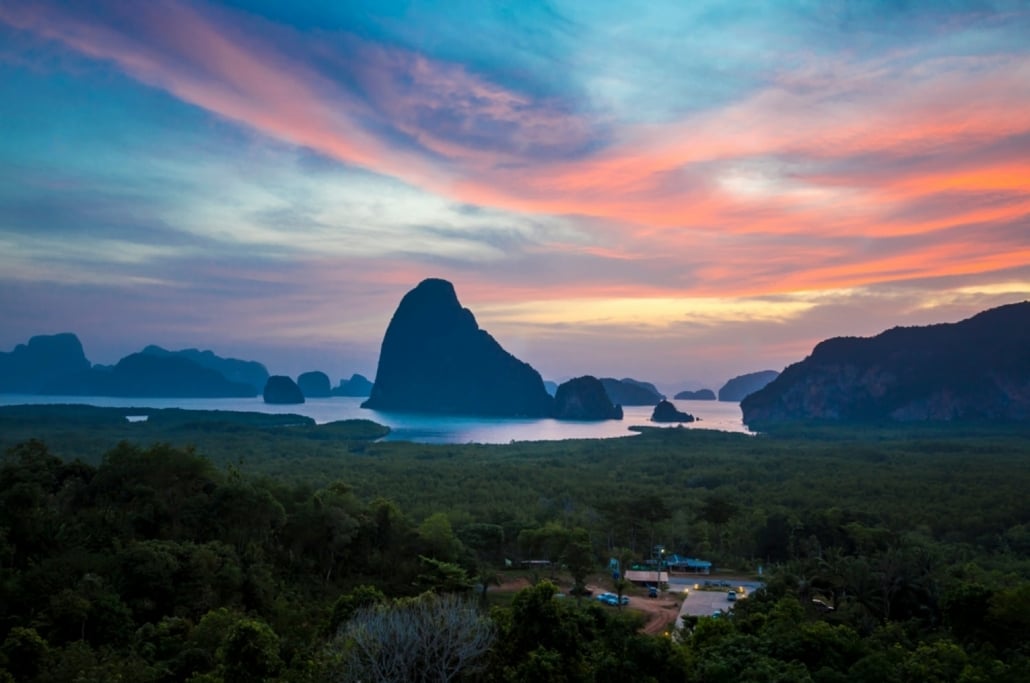
August sits within Khao Sok’s wet season, which runs from May to November. Regular cloud cover and rising moisture give the karsts a softer, more layered appearance than in the drier months.
Warm, humid air condenses around the cliff faces overnight, and thin mist often lingers over the water until mid-morning. Diffused cloud cover spreads light evenly across the lake, reducing the harsh shadows more common during the December to April dry season. Cheow Lan Lake stretches across 165 square kilometres within the wider 739 square kilometre National Park, and more than one hundred limestone karsts rise directly from its emerald surface.
September is Khao Sok’s wettest month, averaging 375mm of rainfall, while February is the driest, at around 30mm. August falls in the build-up toward that peak, with regular but not yet constant rain. Showers tend to arrive in shorter spells, often clearing to reveal clean, cloud-streaked skies across the karsts by afternoon. Readers planning a dry season visit instead may prefer the conditions covered in this site’s photography guide to Khao Sok’s viewpoints, which focuses on February’s clearer skies.
Getting Among the Monoliths: Boats, Kayaks and Trails

Longtail boats remain the main way to reach the karsts scattered across Cheow Lan Lake. Quieter channels away from the main pier offer a closer, calmer view of the cliffs.
Guided longtail boat trips wind through narrower inlets, where limestone walls rise directly from the water on both sides. These channels see far less boat traffic than the open lake, making them well suited to slower, more deliberate exploration. Cliff-side kayaking is also available through tours recommended on this site, allowing a closer look at the karsts from water level, with the option to paddle into shaded coves beneath overhanging rock.
On land, short forest trails lead to a handful of viewpoints overlooking the lake and its surrounding peaks. These walks are guided and typically suit travellers of moderate physical ability. Together, the boat routes, kayaking channels and trail viewpoints give a rounded sense of the karsts from several different angles, rather than a single vantage point. For a fuller picture of the lake itself, this site’s guide to exploring Cheow Lan Lake covers the wider area in more depth.
Where to Stay for Sunrise Over the Karsts
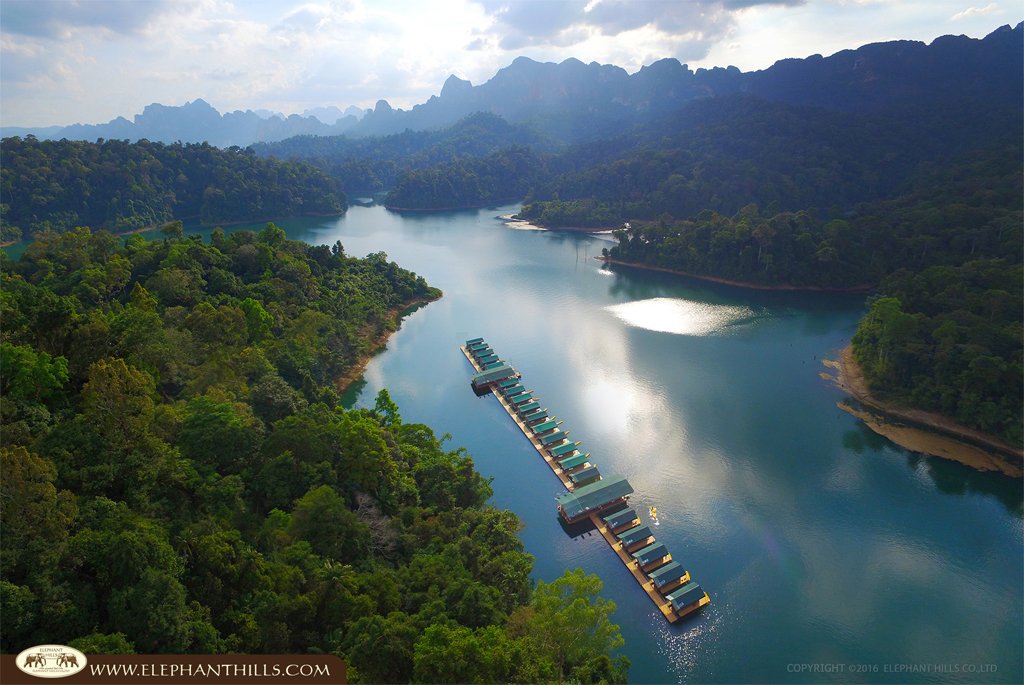
Overnight floating accommodation on Cheow Lan Lake places travellers among the karsts before the first day-tour boats arrive. Early light is often the calmest and clearest of the day.
Floating raft houses are one of several accommodation options available on the lake, offering direct water-level views of the surrounding limestone cliffs. Staying overnight means guests are on the water at sunrise, when the previous night’s cloud cover often lifts slowly, revealing the karsts in stages rather than all at once. Conditions can vary morning to morning, given August’s position within the wet season, though this variability is part of what makes each sunrise on the lake distinct.
Guests travelling with children or in larger groups may prefer a shorter stay closer to the pier, while those seeking a quieter view often choose a night further into the lake’s channels. Either way, mornings on the water tend to reward early risers with the clearest views of the karsts before the day’s boat traffic builds.
Floating accommodation, kayaking and guided boat routes through the karsts are all available through tours recommended on this site. Booking ahead is advisable, as overnight lake accommodation has limited capacity.
Frequently Asked Questions
How old are the limestone karsts in Khao Sok?
The limestone began forming as a coral reef around 280 to 225 million years ago, during the Permian period. The rock was later pushed upward around 66 million years ago, when the Indian tectonic plate collided with the Eurasian plate, the same event that raised the Himalayas.
Is August a good time to see Khao Sok’s karsts?
August sits within Khao Sok’s wet season, which runs from May to November. Cloud cover and morning mist give the karsts a softer, more layered look than the clearer, sharper conditions typical of the dry season.
How many limestone karsts rise from Cheow Lan Lake?
More than one hundred limestone karsts rise from the surface of Cheow Lan Lake, which covers 165 square kilometres within the wider 739 square kilometre National Park.
Can visitors stay overnight among the karsts?
Yes. Floating accommodation on Cheow Lan Lake is available through tours recommended on this site, placing guests among the karsts overnight and in position for early morning light.
What is the tallest peak in Khao Sok National Park?
The tallest peak in Khao Sok National Park reaches 960 metres. Ground level across the region sits at around 200 metres above sea level, with average peaks reaching roughly 400 metres.
Ready to see the karsts up close? Explore the recommended tours for overnight floating stays, kayaking and guided boat routes across Cheow Lan Lake.
You might also like:
Khao Sok Photography Guide: Best Viewpoints and Light
Exploring Cheow Lan Lake: The Jewel of Khao Sok
Khao Sok’s Seasonal Secrets: Fewer Crowds, Greater Rewards