A Small Change, A More Magical Experience [Starting 1 May 2026]
We're making a few gentle changes to how you'll experience our tours - designed to feel even more natural and enjoyable for both you and the elephants. Full Information → ×
Gibbon
Body:43-­58 cm
Tail:None
Weight:4.5­-6 kg

Gibbon

Hylobates lar

Description:
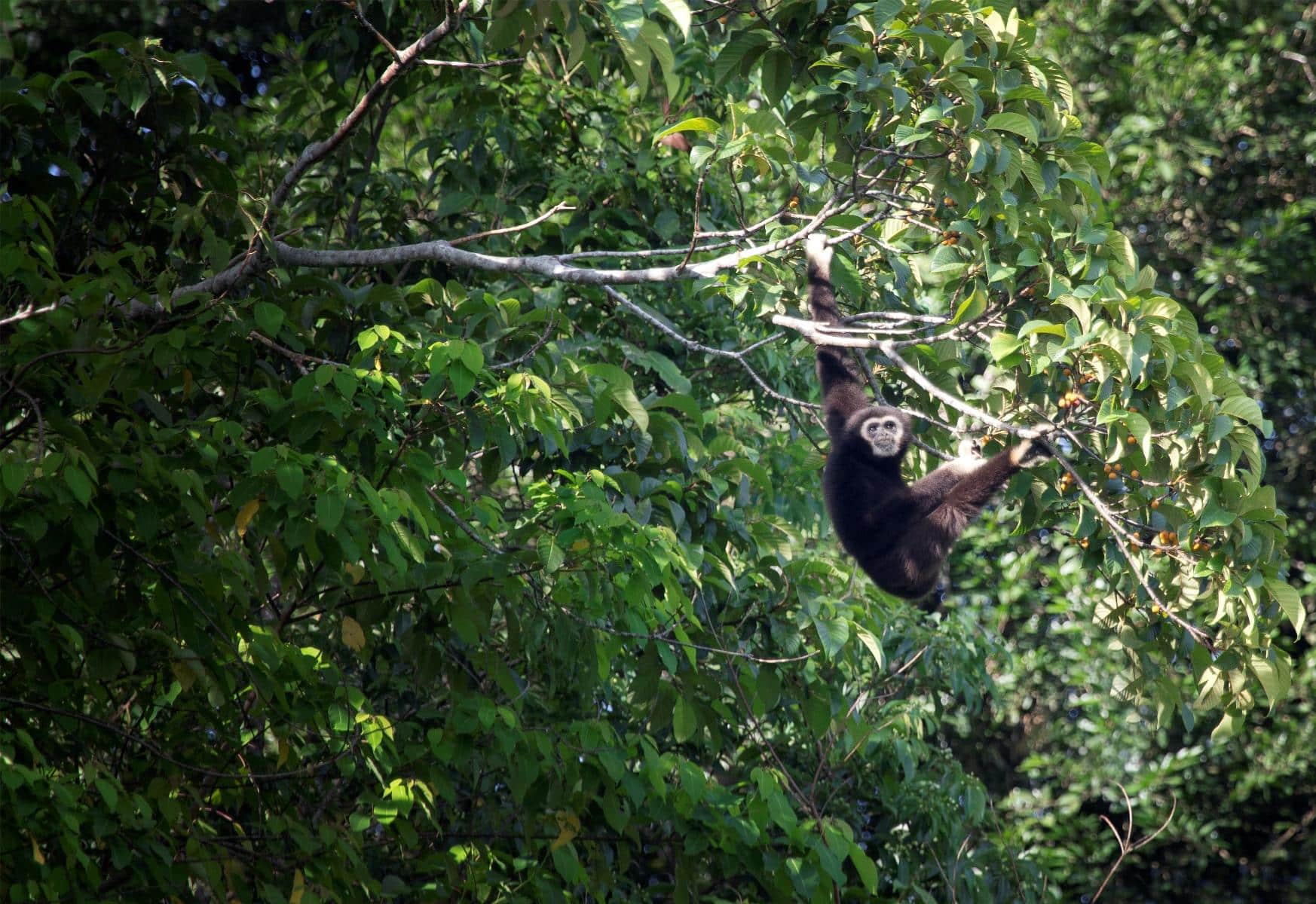
Gibbons are not very easy to see, because they spend most of their life high up in the canopy – but they are easy to be heard. Gibbons call as a way of marking territory and warning family members about predators. Songs vary from males to females. Gibbons have no tail which is one reason why they are not considered monkeys but apes. They have long arms, enabling them to brachiate (swing) between tree branches. A gibbon can brachiate at speeds as high as 55km/h (35 mph) and can travel as far as 9 m (30 feet) in one swing. Most other primates simply jump between branches. Gibbons have a lifespan of about 44 years ‘endangered’ on the IUCN Red List.

Did you know...?

… that gibbons sometimes eat small birds which they catch in the air – mid­swing?

Colouring:
White­handed gibbons have a white face and white hands and feet. Their fur ranges from cream to black, and this variation is unrelated to gender or age.

Diet:
Fruit makes up 50 per cent of their diet, but they also feed on leaves, insects, flowers, stems and buds.

Habitat:
Gibbons are forest dwellers, usually found in the canopy. They are found in semi­deciduous monsoon forests and tropical evergreen forests. They have a territory of 12 to 53 hectares, which the male defends from other males and the female defends from other females.

Reproduction:
It has long been believed that gibbons were monogamous, but more recent research shows that this is not quite true – extra­pair copulations, partner changes and polyandrous groupings are also possible. There is no set breeding season for gibbons. The gestation period is about 7 months, usually resulting in the birth of a single baby with birth weight of about 308g. It then takes about 2 years for the baby to be weaned and about 8 years before the offspring are ready to breed themselves. Once the offspring are capable of looking after themselves, they are chased away by their parents.