A Small Change, A More Magical Experience [Starting 1 May 2026]
We're making a few gentle changes to how you'll experience our tours - designed to feel even more natural and enjoyable for both you and the elephants. Full Information → ×
CoconutPalm

Coconut Palm

Arecaceae

Description:
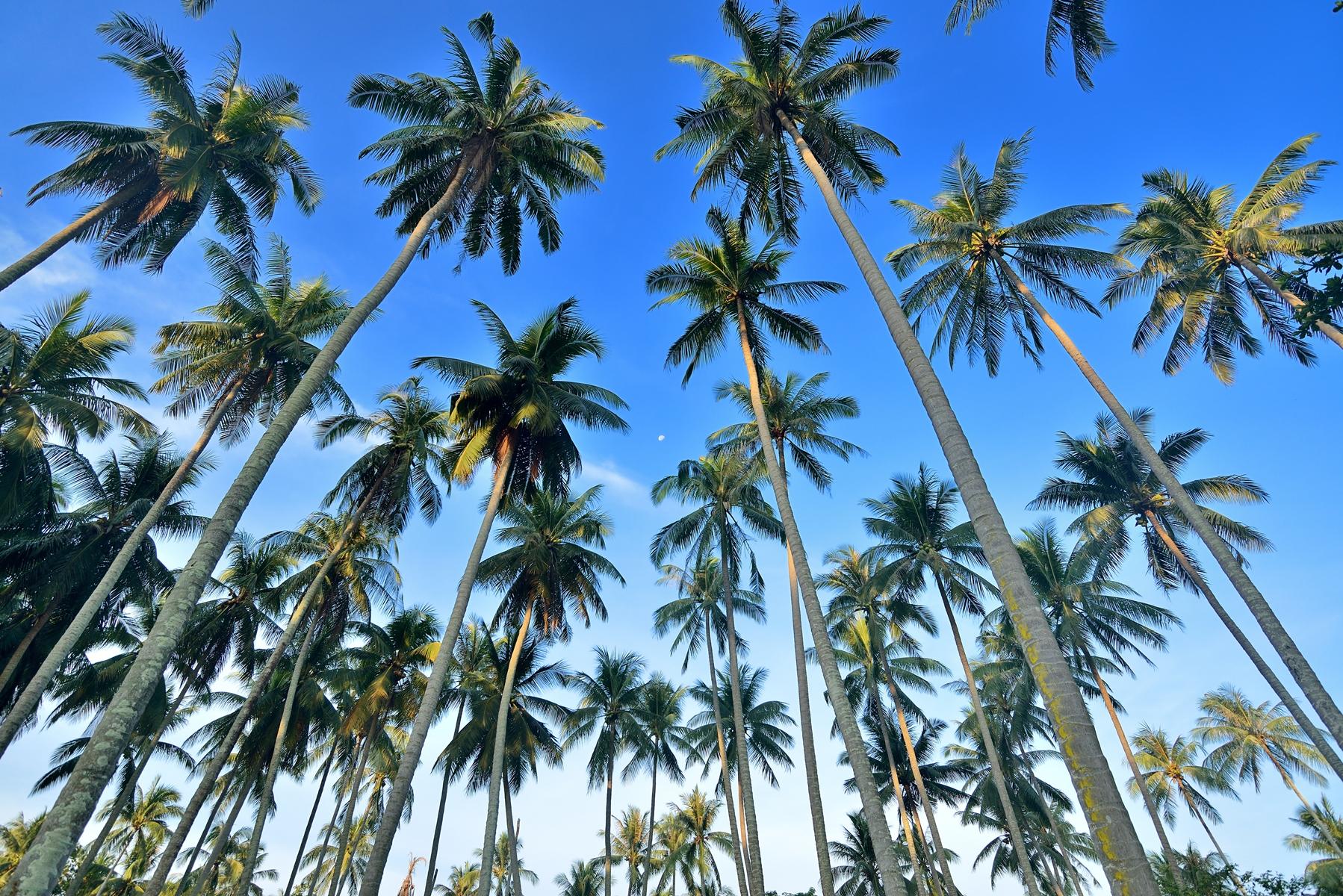
Coconuts grow at the top of large palms (up to 30m tall), with 4 to 6m long, evergreen, feather – like leaves. The palm starts producing coconuts after about 6 years and becomes most productive by the age of 15 to 20 years. It continues to fruit until about 80 years of age. One tree can produce between 50 and 200 coconuts per year. Coconuts are an important food crop. In 2005, Thailand produced 1.5 million tons of coconuts, which made it the sixth biggest producer in the world.

Did you know...?

Coconuts can float on water across oceans for several months until they reach new ground to create roots and grow, because the seedling developing inside the coconut feeds on the coconut water and coconut meat provided.
Habitat:
Coconuts are traditionally found in coastal settings, but they can easily be grown on plantations within a range of environments.

Coconut
Botanically speaking, coconuts are drupes, not nuts. A coconut weighs between 2 and 3 kilograms and is comprised of 4 layers: the outer shell, the husk, the kernel, and the coconut meat. A green coconut is one that has not yet matured, the meat is not fully formed and there is up to one liter of sweet liquid (water) inside. A brown coconut has matured with a decent layer of coconut meat and less liquid. The liquid within the coconut is very clean and is a good source of sterile water in the jungle.

Usage:
Coconut meat is the only part of the coconut used for cooking. The shredded meat is a popular ingredient in many snacks. Coconut milk and oil are also made of shredded coconut meat. The kernel is often used to make kitchen tools (forks, spoons, etc.) or souvenirs. Husks from ideal flowerpots, rugs and baskets. Coconut leaves are used to wrap cooked food and also to make roofs for houses. The trunk is also handy when it comes to construction work and a good material for furniture and décor. Even the last part of the coconut palm – the roots – is useful! They can be a remedy for diarrhea and dysentery.