Dipterocarp Tree
Dipterocarpaceae
Description:
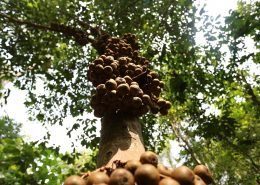
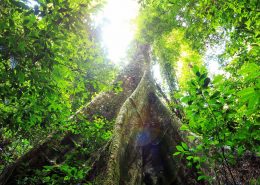
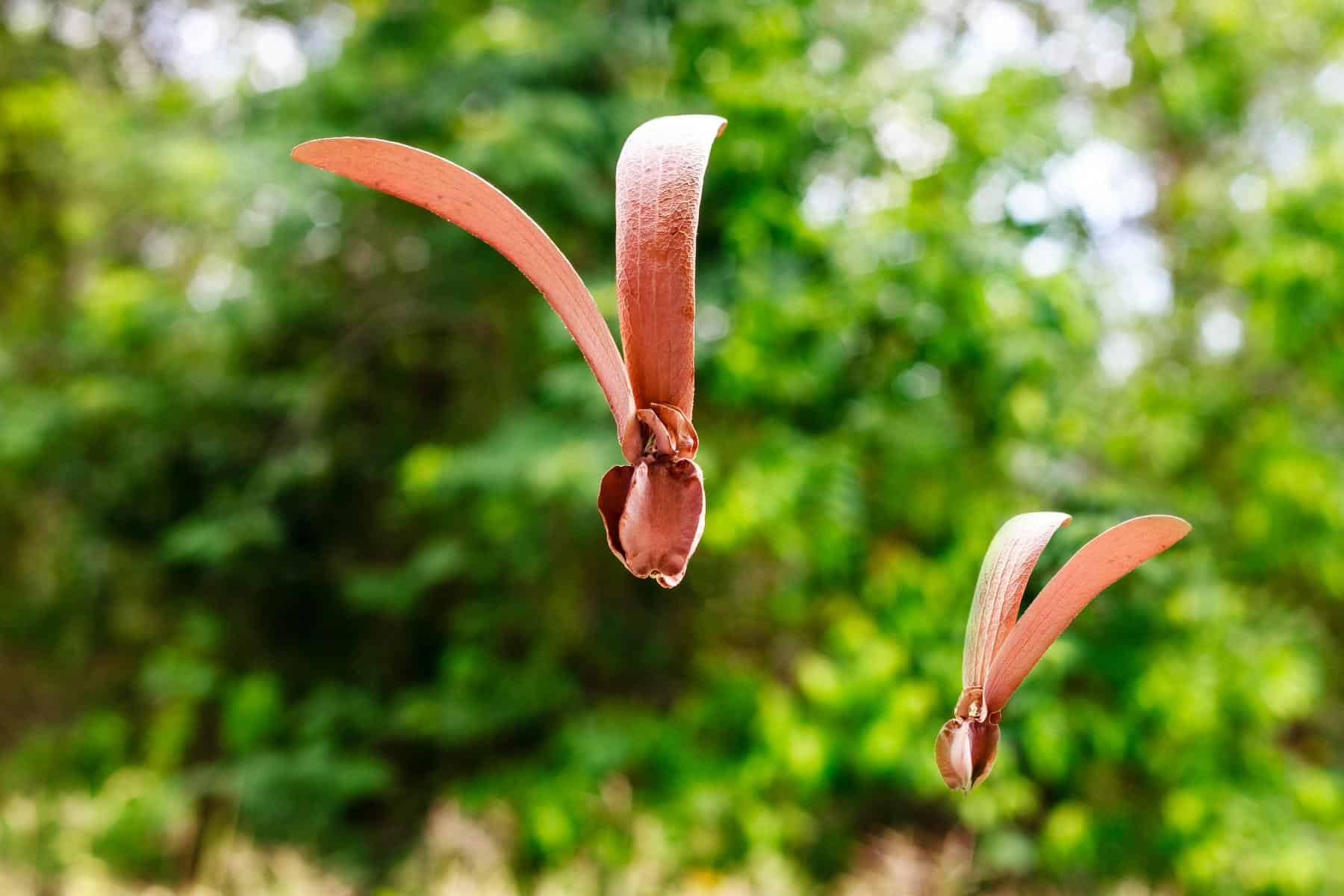
There are about 500 species of Dipterocarps in the world, of which more than 60 species/sub species can be found in Thailand. The name Dipterocarp means ‘fruit with two wings’, which, due to these two ‘wings’, are capable of gliding/spiraling away from the parent tree. Dipterocarps are tall straight trees (sometimes buttressed) with no branches on the trunk up until the canopy level. They can grow between 40 and 70 meters in height with trunk diameters in excess of 2 meters. Some species are considered critically endangered on the IUCN Red list, since they are popular trees in the logging industry for wood, oils, resins, and balsam. Global climate change and loss of habitat are also factors contributing to declining populations. Gibbons and giant tree squirrels often feed on the fruit from these trees.
Did you know...?
…that Dipterocarp saplings emit a sweet sugarlike liquid attracting certain species of ant that defend the saplings from being eaten by other insects?