A Small Change, A More Magical Experience [Starting 1 May 2026]
We're making a few gentle changes to how you'll experience our tours - designed to feel even more natural and enjoyable for both you and the elephants. Full Information → ×
Tiger 2
Body:1.9 – 3.7 m (length)
Tail:up to 1 m
Weight:91 ­ 423 kg

Tiger

Phanthera tigris

Description:
The tiger is the heaviest of all the cats in the world. Male tigers are bigger than females – body size varies between subspecies. Tigers are excellent tree climbers and swimmers being able to even cross rivers that are several kilometers wide. They can have territories of 60 to 100 km2, which explains why habitat loss is such a threat for tigers. A tiger can live up to 26 years in captivity. In the wild they normally live about 8 to 10 years. Tigers used to roam the planet from the Caspian Sea to Siberia, now they are restricted to isolated spots in Southeast Asia and Siberia. Some 40 years ago there were still two more subspecies of tigers around that are extinct today. Tigers are classified on the IUCN Red list as ‘endangered’ and are included in Appendix I of CITES.

Did you know...?

… that unlike other cats tigers actually like the water and can swim more than 6km?
Colouring:
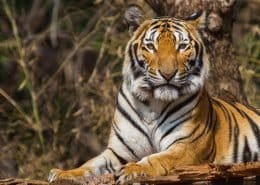
Tigers have a reddish­orange coat with vertical black stripes along the flanks and shoulders varying in size, length, and spacing. The underside of the limbs and belly, chest, throat, and muzzle are white or light cream.

Diet:
Tigers are almost exclusively carnivores and will happily eat any animal that it can catch. They can reach speeds of 50 to 60 km/h (35 to 40 mph) but rather tend to ambush their prey, sneaking up to them and surprising them. A tiger can eat between 18 and 40 kg of meat in one go, usually not eating every day. Tigers will occasionally eat vegetation for dietary fiber, preferring the fruit of the Slow Match Tree.

Habitat:
Tigers are able to cope with a broad range of climatic variations. Therefore they can live in a wide variety of habitats being found, for example, in tropical lowland evergreen forests, monsoon forests, tall grass jungles, mangrove swamps, dry thorn forests and many other habitats.

Reproduction:
Tigers commonly mate between November and April, but this doesn’t mean that they can’t mate during the rest of the year. Male tigers tend to be solitary, joining female tigers only for mating. The gestation period is about 3 months, resulting in a litter of 1 to 7 cubs with a birth weight of about 1 kg. Weaning occurs after 3 months. Young tigers live together with their mothers and learn everything they need to know, including hunting, from her. The little cubs become independent after 1.5 years and reach sexual maturity around an age of 3 to 4 years.