A Small Change, A More Magical Experience [Starting 1 May 2026]
We're making a few gentle changes to how you'll experience our tours - designed to feel even more natural and enjoyable for both you and the elephants. Full Information → ×
Hornbill
Length:Body: 30 cm. – 1 m. ( not include tail)
Bill- Tail: 1.5 m.
2 species tail feather: 50 cm. (longer than tail)
Wingspan: 1.5 m.
Weight:2-3 kg.

Hornbill

Bucerotiformes

Description:
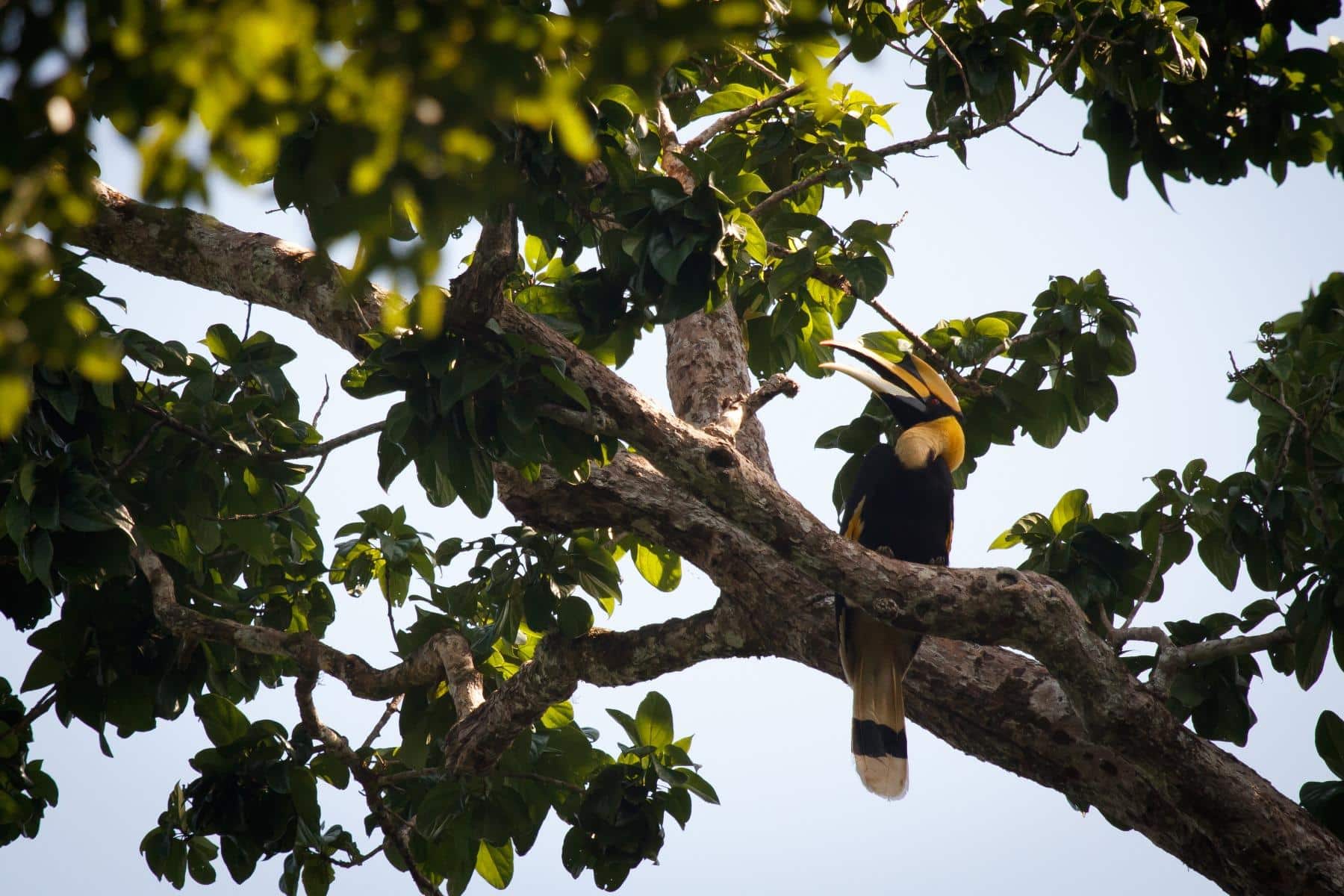
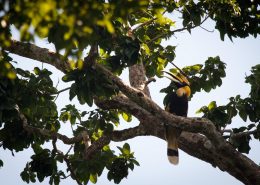
There are 57 different species of hornbill in the world, nine of which live in Khao Sok National Park. Hornbills are characterized by a long, down­curved bill with a casque (horn) on top. The casque is hollow and serves no known purpose, although they are believed to be the result of sexual selection. Males are usually larger than female hornbills, weighing up to 17% more and having a greater wingspan. Great Hornbills have a wingspan of about 1.5 m, making them Khao Sok’s largest birds! The height of hornbills can range from 30 cm to 1 m (without counting their tail). Hornbills can live up to 30 years of age, and are mostly black and white in color with some yellow and red usually on their casques. Most species are classified between ‘lower risk’ and ‘near threatened’ by the IUCN. The Great and Helmeted Hornbills are listed in appendix I of CITES, since the casque can be used as a carving material, similar to ivory.

Did you know...?

… that hornbills have eyelashes, protecting their eyes from debris? Take a close look next time you spot one!
Diet:
Hornbills are omnivorous with a range of diets from almost wholly carnivorous to almost wholly frugivorous (fruit eating) species. Their diet consists of fruit, berries, insects, small mammals, other birds, other birds’ eggs and reptiles. Few species appear to need water to drink, most gaining all the moisture they need from food.

Habitat:
Hornbills can be found in many areas of this planet, from southern parts of Africa (south of the Sahara) to the Philippines and Solomon Islands. Most hornbills are arboreal birds spending a huge part of their time on trees in dense forests – especially the frugivorous species.

Reproduction:
Hornbills are monogamous and tend to mate for life. Before nesting, the male offers the female a gift (food) and takes her to the nest site – which usually is a hole inside a tree or cliff face. The female then enters this hole and proceeds to block up the entrance with organic materials, whilst the male does the same from the outside. Only a very small hole is left open, large enough for food and excrements to be passed through, preventing the nest from being raided by predators. Larger species lay only 2 eggs, but clutches of smaller birds may consist of as many as 8 eggs. Incubation lasts between 23 and 46 days (depending on the species and egg size). After about six or seven weeks, the female will break out of her prison and help the male collect food. Fledging can take anything between 1.5 and 4.5 months with sexual maturity occurring after one year (smaller species) or after 3 to 6 years (larger species).