
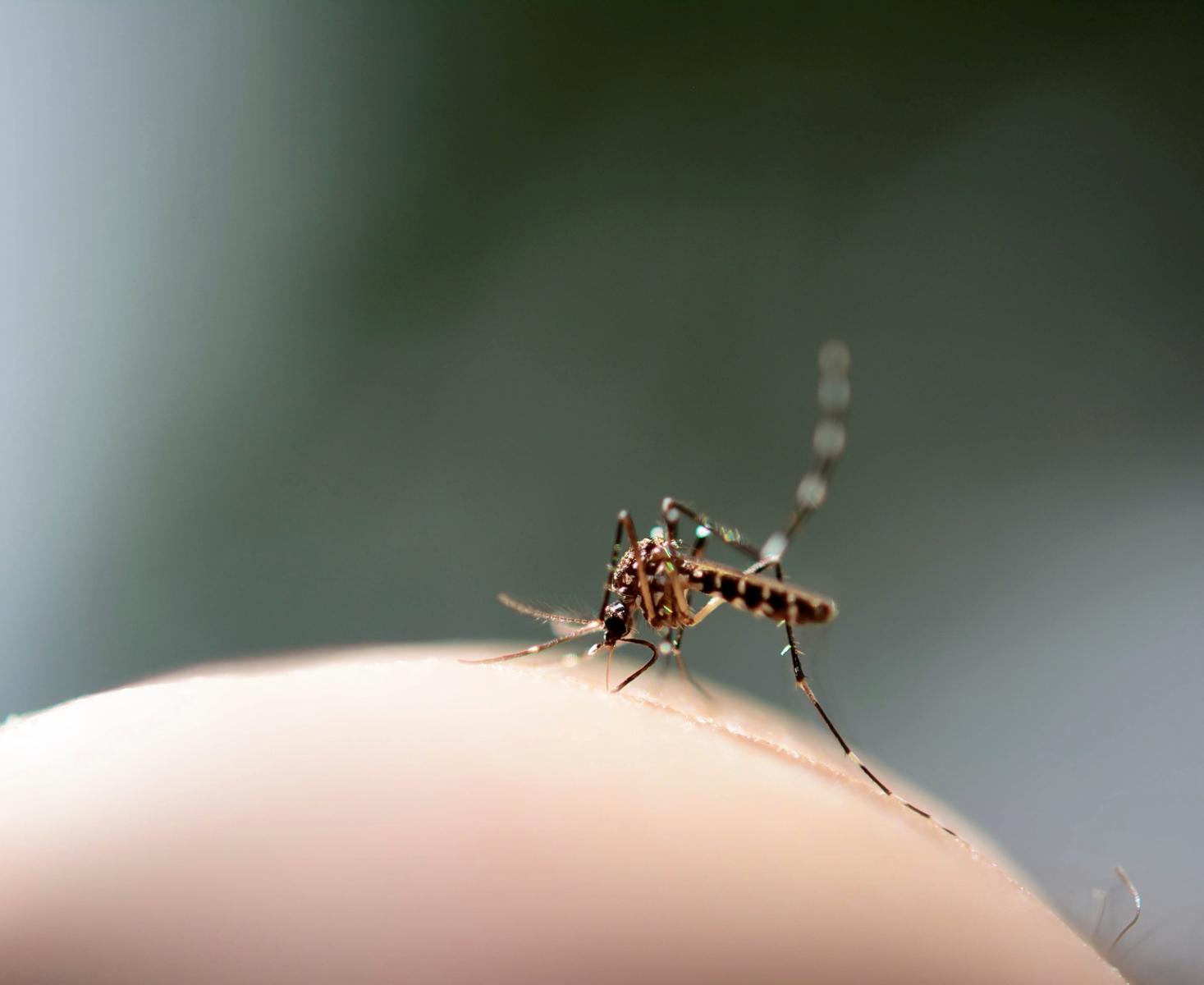
| Length: | Average 4-6 mm. (2-10 mm. depending on the species) |
| Life Cycle: | Male: 7 Day Female: more than 7 day, maybe 1 m. |
Mosquito
Culicidae
Description:
Mosquitoes have a pair of scaled wings, a pair of halteres (flight stabilizers), a slender body, and long legs. Mosquitos detect blood resources through the carbon dioxide in a mammal’s exhaled breath. Once in close proximity, the mosquito can also see infrared (heat). During the heat of the day most mosquitoes rest in a cool place and wait for the evenings, but they may still bite if disturbed. A mosquito can fly at up to 1–2 km/h with a maximum travelling distance of about 10 km per night. This slow speed of flight means keeping a fan on overnight can be an effective means of preventing bites.
Did you know...?
… that only female mosquitos suck blood? Male mosquitos feed entirely on nectar, because they don’t need the nutrients from blood (proteins and iron) to grow and lay eggs.