A Small Change, A More Magical Experience [Starting 1 May 2026]
We're making a few gentle changes to how you'll experience our tours - designed to feel even more natural and enjoyable for both you and the elephants. Full Information → ×
Pangolin
Size:30 to 100 cm
Weight:Depending on the species.
Giant ground pangolins are the largest of all eight species, weigh 33 kg while Long-tailed pangolins, the smallest, weigh around 2-3 kg.
Colouring:These animals have many different colors. They can be a light sandy color, dark brown, olive-brown, pale olive or yellowish-brown.

Pangolin

(fam: Manidae)

Description:
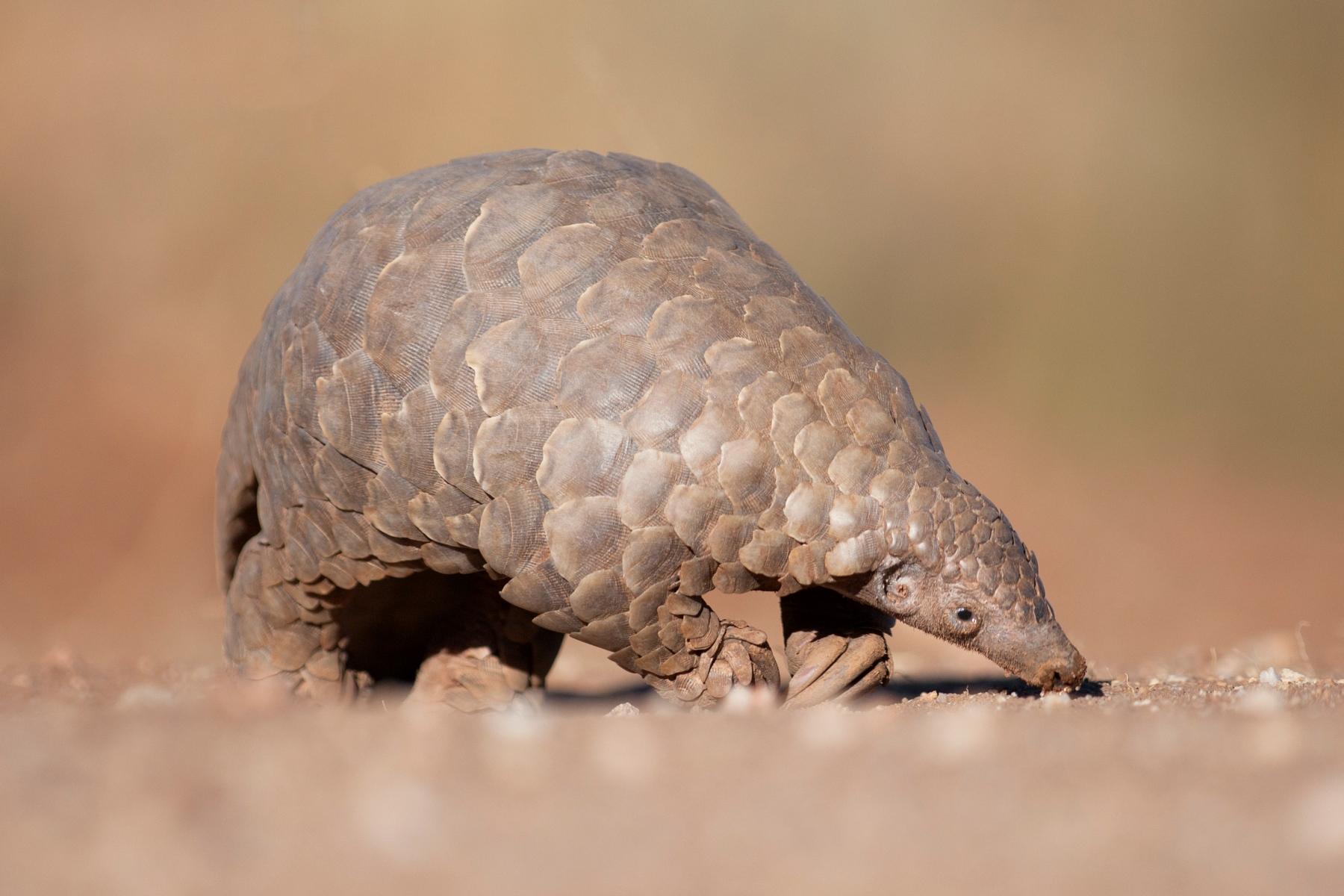
Pangolins are mammals belonging to the order of Pholidota. Unlike other mammals, they don’t have hair all over their body, but instead they have scales made out of keratin. These scales are very hard and can protect the animal from predators. Pangolins are nocturnal and don’t have a very good eye sight; they mostly rely on their sense of smell in order to find food. Pangolins are solitary animals and only meet for mating.

Did you know...?

Keratin, the material that a pangolin’s scales are made of, is the same that our hair and nails consist of.
Diet:
The pangolin is an insectivore, its diet consists of ants and termites; occasionally they also feed on larvae. They can eat up to 200 grams of insects per day. Their tongue can extend up to about 40 centimeters, which makes it easy for them to find ants and termites inside their nests.

Habitat:
Pangolins are quite tolerant in terms of their habitat preference. In Asia they mostly occur in forest and grassland environments, but there are species in Central and Southern Africa which also like to inhabit savanna. They look for hollow trees or burrows to live in, where they will sleep or rest during the day.

Reproduction:
Unlike many other animals, with pangolins it is the female that will find the male when it comes to mating. She does so by following the scent trail laid by a sexually mature male. If there is competition from several males over one female, they will start fighting for her using their very sharp tail. Gestation period is 120 to 150 days and the female will give birth to 1 to 3 young. When the offspring are born, their scales are white and soft at first, which makes them very vulnerable to predators. At this time, the mother is very protective over her young, until after about one week the scales harden.