A Small Change, A More Magical Experience [Starting 1 May 2026]
We're making a few gentle changes to how you'll experience our tours - designed to feel even more natural and enjoyable for both you and the elephants. Full Information → ×
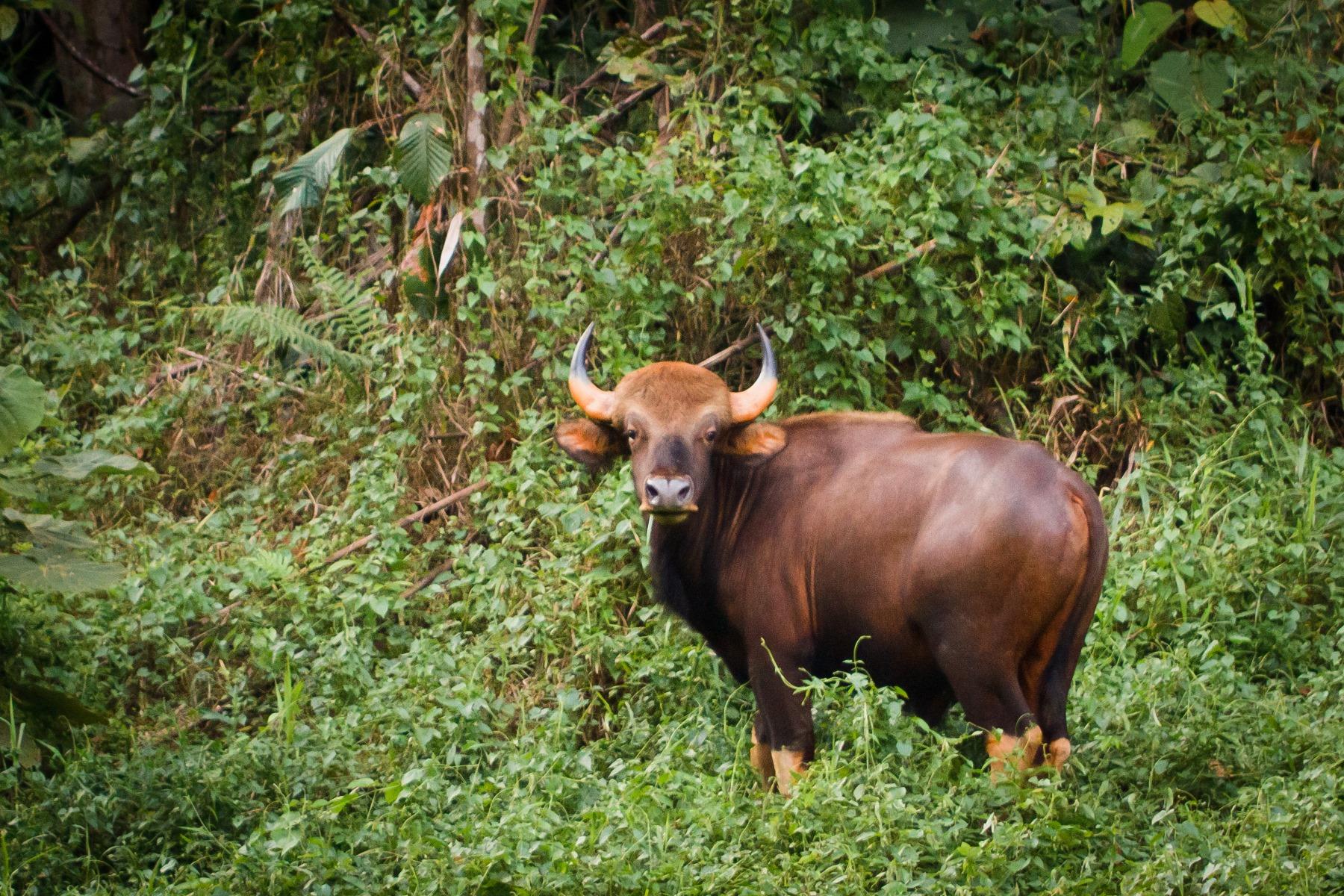
Gaur looks at camera in Khao Sok National Park.
Length:Head-and-body length of 2.5-3.3 m with a 0.7-1.05 m long tail, and is 1.65-2.2 m high at the shoulder.
Weight:Average weight of adult gaur is 650 to 1,000 kg.
Colouring:The color is dark brown for males and pale brown for females and young.

Gaur

(Bos gaurus)

Description:
The Gaur is a species of wild cattle native to Asia and South East Asia. A male bull can grow longer than 3 meters and higher than 2 meters, making it one of the biggest land animals living on our planet. Only elephants, rhinos, hippopotamus and giraffes grow taller than them. The gaur is listed as ‘vulnerable’ on the IUCN red list, but in well protected areas such as the Khao Sok national park the populations were found to be stable. Gaurs have large ears and both male and female have big horns on their heads.

Did you know...?

Gaurs are naturally diurnal, meaning they are active during the day and sleep at night. However, if they feel threatened by people moving into their habitat, they can change this and become nocturnal (active at night).
Diet:
Gaur feed by grazing and browsing forest areas. They live on leaves, stems and seeds. In summer, when fresh plant material is not always available, they will also include bark and fruit into their diet. The bark of the teak tree has been reported to contain high concentrations of calcium and phosphorus, so the consumption of teak bark might help the animals to get additional nutrients into their diet. Gaurs live in small groups of 8 to 11 individuals. The oldest female, called matriarch, will lead the group.

Habitat:
Historically the habitat of gaur used to cover the whole of South Asia and South East Asia. However, today its habitat is very fragmented, mostly due to human interference. Gaurs like to live in evergreen forests, semi‐evergreen forests and also moist deciduous forests given that there is enough water available.

Reproduction:
In the mating season, males will visit different groups of females and mate with as many of them as possible. Dominance is not established by fighting each other but is determined by the size of the male. Gestation period of a female is about 9 months. Sexual maturity is reached between the age of 2 and 3 years. The female gives birth to one, or sometimes 2 calves. Gaurs can live up to 30 years old.