A Small Change, A More Magical Experience [Starting 1 May 2026]
We're making a few gentle changes to how you'll experience our tours - designed to feel even more natural and enjoyable for both you and the elephants. Full Information → ×
PrayingMantis
Length:1 and 16 cm.
Life cycle:Average 12 m.

Praying Mantis

Mantodea

Description:
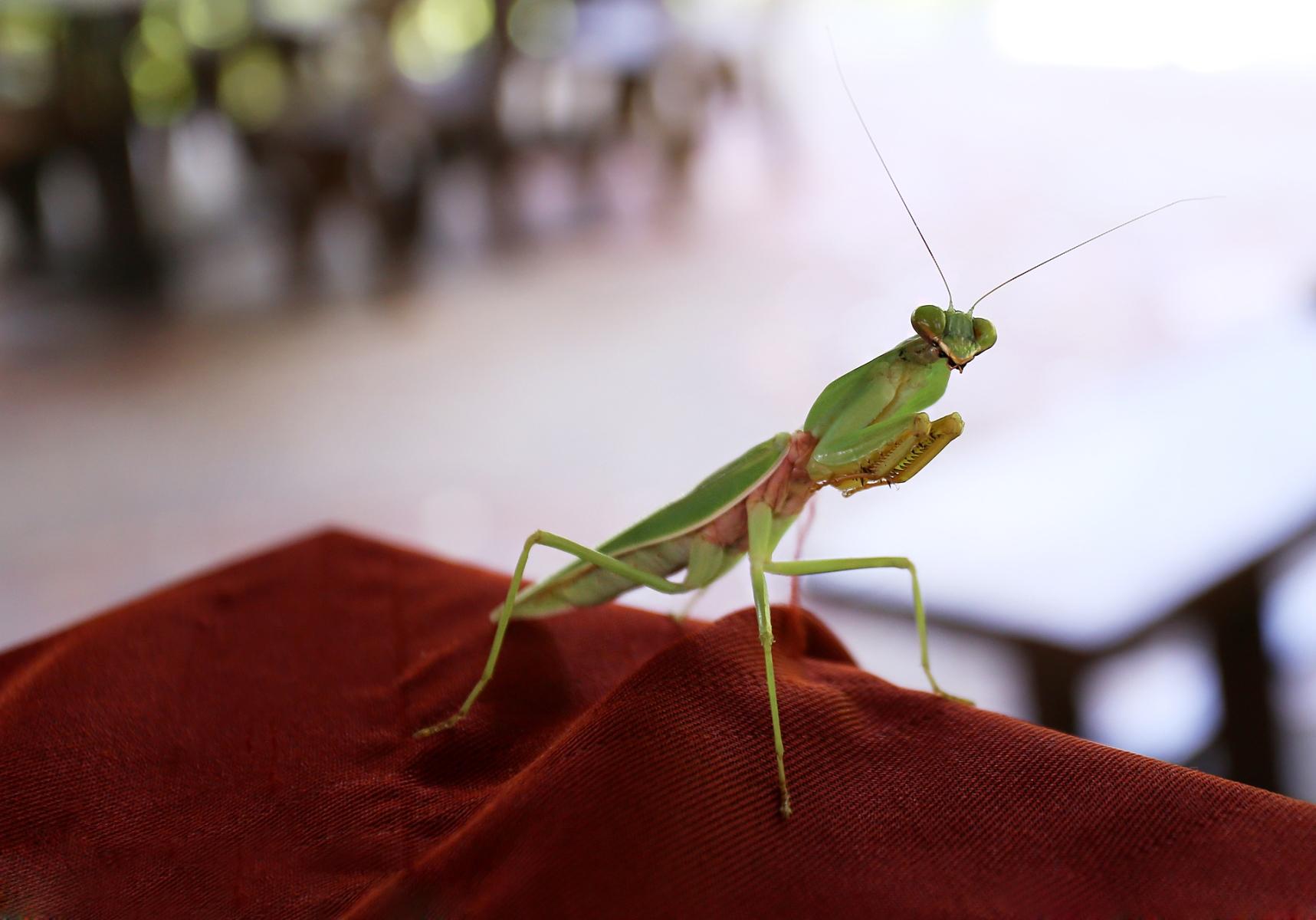
Praying mantises are closely related to termites and cockroaches. The word mantis is Greek and means ‘prophet’ or ‘fortune teller’. It is more or less well­known that female mantises eat the male after reproduction; however, studies reveal that this is not always the case and happens only in 30 percent of all cases. With their bright green color and slender body shape mantises are masters of camouflage, both to avoid being eaten, and to ambush their prey. The natural lifespan of a mantis in the wild is about 10­-12 months.

Did you know...?

… that mantises are the only insects that can turn their head 180 degrees? Furthermore, they only have one ear, which is located in front of their hind legs and used to sense echolocation to avoid flying predators such as bats.
Diet:
Mantises catch their prey and hold it with a tight grasp between their spiked forelegs. Their diet usually consists of insects, including flies and aphids. Larger mantises have been known to eat small lizards, frogs, birds, snakes, and even rodents.

Habitat:
Mantises are found only on land in rainforests, dry forests, undisturbed and second­growth forests.

Reproduction
Female mantises release a pheromone for males to know that she is ready to mate. The male usually gets onto the female’s back and deposits sperm in a special chamber near the tip of the female’s abdomen. Female mantises can then lay between 10 and 400 eggs, which they will then cover with a special kind of foam to protect them.