
| Length: | 15 cm. (Including legs) |
| Weigh: | 42 g. |
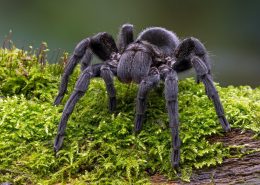
Thai Black Tarantula
Haplopelma minax
Description:
There are about 850 species of tarantula on our Planet, but only three of these huge spiders can be found in Thailand: the Thai Zebra tarantula, the Cobalt Blue, and the Thai Black tarantula – latter one lives in Khao Sok National Park. This tarantula belongs to the subfamily Ornithoctoninae, also known as ‘earth tigers’. The Thai Black tarantula tends to live in burrows in the ground, can move fast and is known to be quite aggressive. They bite when feeling in danger and have quite a strong venom.
Luckily, for humans their bite is not deadly, unless the victim is allergic.
The Thai Black tarantula measures up to 15 cm (6 inches), including legs, and can weigh about 42 g, with males being smaller than females. They are completely black and do not change into brown before each molt (which is common for other tarantula species). These tarantulas molt up to 6 times in their first year after hatching, during the following years they molt once a year.
Did you know...?
… that female tarantulas attack (and sometimes even kill) their male counterparts right after mating? Obviously the main reason why males speed away as soon as the process is over.